


Regulatory Science Tools Catalog
The Regulatory Science Tools Catalog provides a peer-reviewed resource for use where standards and qualified Medical Device Development Tools (MDDTs) do not yet exist. These tools do not replace FDA-recognized standards or MDDTs. This catalog collates a variety of regulatory science tools that the FDA's Center for Devices and Radiological Health's (CDRH) Office of Science and Engineering Labs (OSEL) developed. If you are considering using a tool from this catalog in your marketing submissions, note that these tools have not been qualified as Medical Device Development Tools and the FDA has not evaluated the suitability of these tools within any specific context of use. You may request feedback or meetings for medical device submissions as part of the Q-Submission Program.
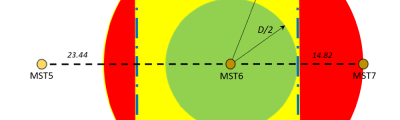
This regulatory science tool is a lab method developed to assist end users in printing accurate Monk skin tone (MST) scales with consumer-grade color printers.
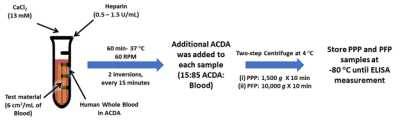
This regulatory science tool (RST) is a benchtop test method for performing material-mediated thrombogenicity assessment of blood-contacting medical devices and materials using molecular biomarkers to characterize platelet and coagulation activation in a single set of tests.
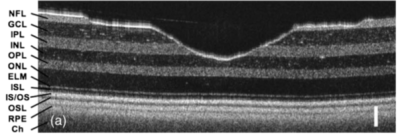
This regulatory science tool (RST) is a phantom that enables image quality assessment of ophthalmic optical coherence tomography (OCT) devices.

This regulatory science tool (RST) is a dataset of whole slide images and pathologist annotations for use in the development of new statistical methods.
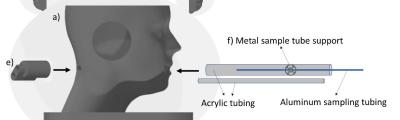
This regulatory science tool is a laboratory method for measuring fit-factor of re-used and/or decontaminated N95 respirators using adult manikins.

This Regulatory Science Tool (RST) is a Laboratory Method outlining the use of a hydrogen peroxide solution to screen for oxidative degradation. This method allows for maintenance, monitoring and reporting of solution concentration and oxidative capacity and (iii) is demonstrated with UHMWPE as a non-resorbable polymer susceptible to oxidative degradation.

This regulatory science tool (RST) is a laboratory method for measuring the spatial resolution of optical see through augmented reality head mounted displays (AR HMDs) using point spread function analysis.

This regulatory science tool (RST) is a laboratory method that calculates the Contrast Transfer Function (CTF) of Augmented Reality (AR) and Virtual Reality (VR) head mounted displays (HMDs) by quantifying the Michelson contrast as a function of spatial frequency for horizontal or vertical grille patterns displayed on the HMD.
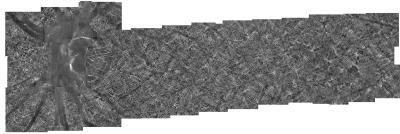
This regulatory science tool (RST) is an adaptive optics – optical coherence tomography angiography (AO-OCTA) method to resolve and quantify retinal vessels including the choriocapillaris (CC) in the living human eye, along with a dataset of CC montages and their morphologic metrics across the macula from healthy individuals. This RST has multiple purposes: 1. It offers one possible approach for performing OCTA for vessel imaging; 2. It describes an approach for measuring CC image quality using a new flow signal to noise ratio (SNR) metric; 3. The dataset can serve as a normative baseline for future studies of retinal pathology and as labelled ground truth data for the assessment of novel algorithms for CC segmentation.

Registration-based Automated Matching and Correspondence (RAMAC) is a tool that automatically identifies corresponding locations of landmarks across multiple images.
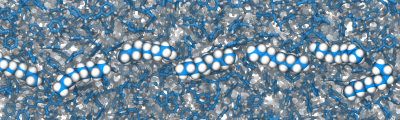
This regulatory science tool (RST) is a lab method that is intended to assist in the detection and quantification of volatiles in aqueous extracts using dynamic headspace gas chromatography-mass spectrometry.

This regulatory science tool is a lab method to measure flow resistivity in microfluidic-based devices, which may be used to identify flow-related failure modes (e.g., bubbles, leakage).

This regulatory science tool is an AI model tool used for developing and evaluating deep learning-based survival models.

This regulatory science tool (RST) is a dataset of facial and oral temperatures collected from infrared thermography of more than1000 human volunteers that may be helpful in evaluating the performance of thermal imaging systems and thermometers.

This regulatory science tool presents an apparatus to measure transfer functions (TF) of implantable medical devices in curved trajectories for MRI safety assessment.
This regulatory science tool describes a method which can be utilized in the Magnetic Resonance Imaging (MRI) safety assessment of implantable medical devices to assist in the prediction of potential RF-induced heating in the human body (or induced voltage in the device) in clinical 1.5T and 3T MRI scanners.
This regulatory science tool is a method that models the link-level traffic patterns in medical extended reality (MXR) applications, which is intended to help recognize application-specific data transmission requirements in IP-based connected medical devices.
This regulatory science tool (RST) is a computational model for predicting implantable lithium battery temperature, remaining capacity and longevity.
DxGoals is a freely-accessible, RShiny software application that is intended to determine and visualize performance goals for common diagnostic test classification accuracy metrics including sensitivity, specificity, positive likelihood ratio, and negative likelihood ratio. Model outputs are dependent on user inputs of desired risk stratification (pre- and post-test probabilities of the target condition). The tool also analyzes whether goals are met with statistical significance.
- Github Webpage: https://github.com/DIDSR/DxGoals
- Link to Software: https://fda-cdrh-osel-didsr-rst.shinyapps.io/DxGoals/

This regulatory science tool (RST) is a MATLAB script that automates the determination of stiffness from the slope of a linear region from mechanical test data using an algorithm that is in compliance with ASTM E3076-18 [1]. Specifically, it analyzes test data (i.e., force-displacement curve or torque-angle curve) and then generates output parameters including bending and torsional stiffness typically requested in the preclinical mechanical performance test standards, ASTM F3574 [2] and ASTM F2267 [3].