


Regulatory Science Tools Catalog
The Regulatory Science Tools Catalog provides a peer-reviewed resource for use where standards and qualified Medical Device Development Tools (MDDTs) do not yet exist. These tools do not replace FDA-recognized standards or MDDTs. This catalog collates a variety of regulatory science tools that the FDA's Center for Devices and Radiological Health's (CDRH) Office of Science and Engineering Labs (OSEL) developed. If you are considering using a tool from this catalog in your marketing submissions, note that these tools have not been qualified as Medical Device Development Tools and the FDA has not evaluated the suitability of these tools within any specific context of use. You may request feedback or meetings for medical device submissions as part of the Q-Submission Program.

This regulatory science tool is a computer model intended to support evaluation of photon counting detectors (PCDs) during the product development phase by generating in-silico X-ray projections of computational anatomical models detected by PCDs.
sFRC (scanning Fourier Ring Correlation) is a tool that compares radiological images from AI or iterative-based image restoration algorithms against those from standard-of-care analytical algorithms to identify and label hallucinations (aka fakes) using small red bounding boxes, which serve as visual indicators of the detected hallucinations.

This regulatory science tool presents two methods to amplify Artificial Intelligence (AI) / Machine Learning (ML) model bias to enable the evaluation of bias mitigation methods on models with varying amounts of performance bias.
This regulatory science tool presents a method (DRAGen) that identifies the types of errors which Artificial Intelligence (AI) / Machine Learning (ML) medical image classification algorithms might make when used on new populations.

This regulatory science tool is a lab method for building a 5G network testbed to assess data transmission of medical device functions using 5G connectivity.

This regulatory science tool (RST) is a method for assessing the image quality of a head mounted display using the display’s transverse chromatic aberration characteristics to align the light measuring device to the eye-point/ center of the eye-box.

This regulatory science tool is a lab method for performing platelet and leukocyte count assays per the <a href="https://www.iso.org/standard/63448.html">ASTM F2888-19 standard</a>, as a part of in vitro thrombogenicity assessment of blood-contacting medical device materials.

This regulatory science tool (RST) is a lab method for evaluating the safety of critical time-dependent radiant power, spectral, and temporal characteristics for multiwavelength high-power laser pointers and handheld compact laser products
This regulatory science tool is a method and phantom design for the evaluation of iodine-specific quantitative measurements, specifically the accurate estimation of iodine concentration within contrast-enhanced spectral CT.

This regulatory science tool is a lab method that may be helpful while evaluating high intensity therapeutic ultrasound (HITU) devices.
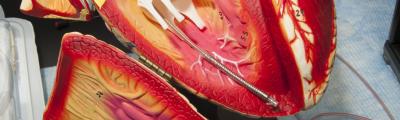
This regulatory science tool is a lab method tool used for simulating target clinical use patient conditions on the bench using a mock circulatory loop in conjunction with the ISO 14708-5 standard specifications for circulatory support devices.
This regulatory science tool is a lab method in the form of a physical mock circulation loop (MCL) used for simulating peripheral radial pressure waveforms.
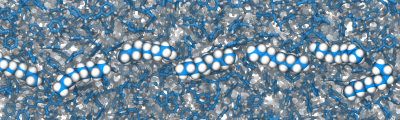
This regulatory science tool is a model for establishing analyte recovery in chemical characterization studies following liquid-liquid extraction.
This regulatory science tool is a lab method that computes bone microstructure metrics to characterize bone morphology and skeletal geometry.
This regulatory science tool is a method for measuring the line spread function (LSF) and calculating the modulation transfer function (MTF) for head mounted displays (HMDs).
This regulatory science tool presents a method to measure the radially variant contrast on virtual reality head-mounted displays (VR HMDs) using circular concentric ring patterns, which can be implemented to characterize image quality, including Michelson contrast and effective resolution, on VR HMDs equipped with optical lenses.
This regulatory science tool presents a method (web-based decision tree) that may help developers select appropriate metric and endpoint for Artificial Intelligence (AI) / Machine learning (ML) classification algorithms in medical imaging.

This regulatory science tool presents a method for assessing credibility of patient-specific computational models implemented in medical device software.
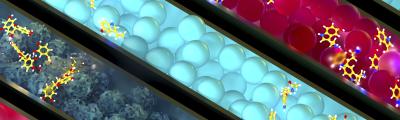
This regulatory science tool is a method that applies the ISO 10993-17 toxicological risk assessment approach to medical device extractables screening data to assess systemic toxicity, genotoxicity, carcinogenicity, or reproductive/developmental toxicity in the biocompatibility evaluation of a medical device.
Chemicals List for Analytical Performance (CLAP)