


Regulatory Science Tools Catalog
The Regulatory Science Tools Catalog provides a peer-reviewed resource for use where standards and qualified Medical Device Development Tools (MDDTs) do not yet exist. These tools do not replace FDA-recognized standards or MDDTs. This catalog collates a variety of regulatory science tools that the FDA's Center for Devices and Radiological Health's (CDRH) Office of Science and Engineering Labs (OSEL) developed. If you are considering using a tool from this catalog in your marketing submissions, note that these tools have not been qualified as Medical Device Development Tools and the FDA has not evaluated the suitability of these tools within any specific context of use. You may request feedback or meetings for medical device submissions as part of the Q-Submission Program.

This regulatory science tool is a lab method that may be helpful while evaluating Photoacoustic Imaging devices.
This regulatory science tool (RST) is a method to evaluate the photochemical damage potential of products that include an optical imaging system and fluorescent contrast agent.
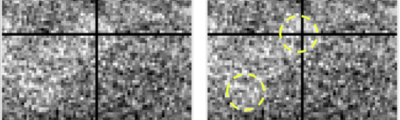
This regulatory science tool (RST) is a software suite that can assist with the objective task-based assessment of digital breast tomosynthesis (DBT) systems imaging performance that uses CDMAM 4.0 phantom and a deep learning (DL) model observer. The RST includes a set of Python scripts, a pre-trained baseline model, and the user’s manuals.
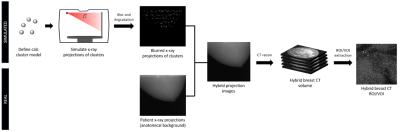
This regulatory science tool (RST) is a software framework for generating hybrid breast CT images that combine simulated microcalcification clusters with real patient breast CT projection data.
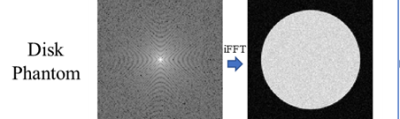
MRI-IQ-ETK is a software toolkit that contains digital test phantom generation and automated image quality evaluation components intended to help assess the performance of MRI image reconstruction methods.

The Pediatric IQ Phantoms tool is a dataset of virtual image quality phantoms in a range of diameters and their computed tomography (CT) images for assessing pediatric generalizability of CT denoising devices.
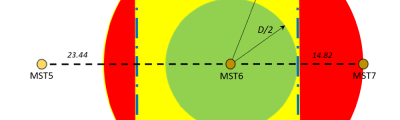
This regulatory science tool is a lab method developed to assist end users in printing accurate Monk skin tone (MST) scales with consumer-grade color printers.

Registration-based Automated Matching and Correspondence (RAMAC) is a tool that automatically identifies corresponding locations of landmarks across multiple images.

This regulatory science tool is an AI model tool used for developing and evaluating deep learning-based survival models.
This regulatory science tool (RST) is a dataset of facial and oral temperatures collected from infrared thermography of more than1000 human volunteers that may be helpful in evaluating the performance of thermal imaging systems and thermometers.
DxGoals is a freely-accessible, RShiny software application that is intended to determine and visualize performance goals for common diagnostic test classification accuracy metrics including sensitivity, specificity, positive likelihood ratio, and negative likelihood ratio. Model outputs are dependent on user inputs of desired risk stratification (pre- and post-test probabilities of the target condition). The tool also analyzes whether goals are met with statistical significance.
- Github Webpage: https://github.com/DIDSR/DxGoals
- Link to Software: https://fda-cdrh-osel-didsr-rst.shinyapps.io/DxGoals/
This regulatory science tool is a Python toolkit for calculating the radiation deposited dose for breast computed tomography (CT). It features a GUI that estimates the mean glandular dose based on various breast models, incident spectrum, and measured air kerma.
This regulatory science tool is a computer model intended to support evaluation of photon counting detectors (PCDs) during the product development phase by generating in-silico X-ray projections of computational anatomical models detected by PCDs.
sFRC (scanning Fourier Ring Correlation) is a tool that compares radiological images from AI or iterative-based image restoration algorithms against those from standard-of-care analytical algorithms to identify and label hallucinations (aka fakes) using small red bounding boxes, which serve as visual indicators of the detected hallucinations.
This regulatory science tool is a method and phantom design for the evaluation of iodine-specific quantitative measurements, specifically the accurate estimation of iodine concentration within contrast-enhanced spectral CT.
This regulatory science tool is a lab method that computes bone microstructure metrics to characterize bone morphology and skeletal geometry.
This regulatory science tool presents a set of tissue-mimicking phantoms suitable for benchtop performance assessment of photoacoustic imaging (PAI) devices.
The Virtual Imaging Clinical Trials for Regulatory Evaluation (VICTRE) computer modeling pipeline is a set of tools that allow for the replication of clinical trials of in silico breast radiographic images for the evaluation of digital mammography (DM) and digital breast tomosynthesis (DBT) devices.
The Virtual Family provides detailed three-dimensional computational models of the human anatomy including an adult male, an adult female, and two children
Test methods that provide a practical approach for objective, quantitative evaluation/comparison of fundamental performance in near-infrared fluorescence imagers.