


Regulatory Science Tools Catalog
The Regulatory Science Tools Catalog provides a peer-reviewed resource for use where standards and qualified Medical Device Development Tools (MDDTs) do not yet exist. These tools do not replace FDA-recognized standards or MDDTs. This catalog collates a variety of regulatory science tools that the FDA's Center for Devices and Radiological Health's (CDRH) Office of Science and Engineering Labs (OSEL) developed. If you are considering using a tool from this catalog in your marketing submissions, note that these tools have not been qualified as Medical Device Development Tools and the FDA has not evaluated the suitability of these tools within any specific context of use. You may request feedback or meetings for medical device submissions as part of the Q-Submission Program.
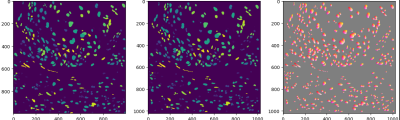
This regulatory science tool (RST) is a computational method that employs conditional denoising diffusion probabilistic model (DDPM) to generate synthetic histopathology images guided by nuclei segmentation masks, helping to augment limited annotated whole slide image (WSI) datasets for AI model development and validation in digital pathology.
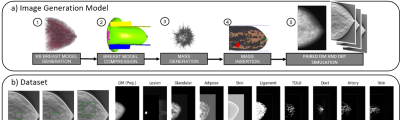
T-SYNTH is a synthetic dataset of paired DM (2D imaging) and DBT (3D imaging) images derived from a Knowledge Based (KB) model, with lesion bounding boxes and pixel-level tissue segmentations of a variety of breast tissues.

This regulatory science tool is a lab method that can be used for the assessment of agreement in overlap-based performance between an AI segmentation device and a multi-expert human panel.
Tools that quantify wait-time-saving benefits and delays for patients with positive diagnoses across various disease conditions due to the implementation of multiple Computer-Aided Triage and Notification devices in a radiology workflow.
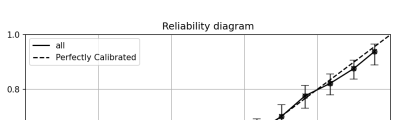
This regulatory science tool is a software for evaluating the calibration of models with probabilistic output.

The Pediatric IQ Phantoms tool is a dataset of virtual image quality phantoms in a range of diameters and their computed tomography (CT) images for assessing pediatric generalizability of CT denoising devices.

Registration-based Automated Matching and Correspondence (RAMAC) is a tool that automatically identifies corresponding locations of landmarks across multiple images.
This regulatory science tool is an AI model tool used for developing and evaluating deep learning-based survival models.

DxGoals is a freely-accessible, RShiny software application that is intended to determine and visualize performance goals for common diagnostic test classification accuracy metrics including sensitivity, specificity, positive likelihood ratio, and negative likelihood ratio. Model outputs are dependent on user inputs of desired risk stratification (pre- and post-test probabilities of the target condition). The tool also analyzes whether goals are met with statistical significance.
- Github Webpage: https://github.com/DIDSR/DxGoals
- Link to Software: https://fda-cdrh-osel-didsr-rst.shinyapps.io/DxGoals/
DomID is a Python package offering a suite of unsupervised deep learning algorithms specifically designed for clustering medical image datasets. The primary goal is to identify subgroups that have not been previously annotated in a given image dataset.
This regulatory science tool (RST) is a software program written in Python for performance assessment of segmentation algorithms applied to digital pathology whole slide images (WSIs).
This regulatory science tool presents two methods to amplify Artificial Intelligence (AI) / Machine Learning (ML) model bias to enable the evaluation of bias mitigation methods on models with varying amounts of performance bias.
This regulatory science tool presents a method (DRAGen) that identifies the types of errors which Artificial Intelligence (AI) / Machine Learning (ML) medical image classification algorithms might make when used on new populations.
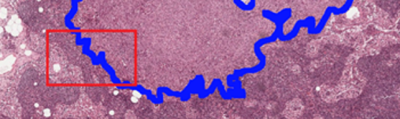
This regulatory science tool is a software program written in Python for analyzing whole slide images (WSIs) and assisting developers or pathologists in the assessment of machine learning algorithms used in digital pathology.
This regulatory science tool is a synthetic mammography dataset that includes a variety of breast densities, breast sizes, and inserted lesions imaged with different exposure levels. The dataset is intended to be used for the comparative evaluation of AI tools used in mammography.
This regulatory science tool presents a method (web-based decision tree) that may help developers select appropriate metric and endpoint for Artificial Intelligence (AI) / Machine learning (ML) classification algorithms in medical imaging.
Tools that quantify wait-time-saving benefits for cases with positive diagnoses due to the adoption of Computer-Aided Triage and Notification devices in a radiology workflow
This regulatory science tool presents a computer model to assist investigators with analyzing and sizing multi-reader multi-case (MRMC) reader studies that compare the difference in the area under Receiver Operating Characteristic curves (AUCs) from two modalities.