


Regulatory Science Tools Catalog
The Regulatory Science Tools Catalog provides a peer-reviewed resource for use where standards and qualified Medical Device Development Tools (MDDTs) do not yet exist. These tools do not replace FDA-recognized standards or MDDTs. This catalog collates a variety of regulatory science tools that the FDA's Center for Devices and Radiological Health's (CDRH) Office of Science and Engineering Labs (OSEL) developed. If you are considering using a tool from this catalog in your marketing submissions, note that these tools have not been qualified as Medical Device Development Tools and the FDA has not evaluated the suitability of these tools within any specific context of use. You may request feedback or meetings for medical device submissions as part of the Q-Submission Program.

This regulatory science tool comprises a model for conducting a retrospective analysis of COVID-19 intervention strategies.

This regulatory science tool comprises a computer model of a human action potential, which includes the effects of heart failure (HF) and the anti-arrhythmic drugs amiodarone (AM) and d-sotalol (DS).

This regulatory science tool presents Python-based software for evaluating computer models that predict the number of COVID-19 deaths or hospitalizations expected in a specific locality.
This regulatory science tool presents a method for assessing credibility of patient-specific computational models implemented in medical device software.

The Virtual Imaging Clinical Trials for Regulatory Evaluation (VICTRE) computer modeling pipeline is a set of tools that allow for the replication of clinical trials of in silico breast radiographic images for the evaluation of digital mammography (DM) and digital breast tomosynthesis (DBT) devices.

A series of benchmark problems with known exact solutions that can be used to verify if tissue-level (e.g., ventricular, atrial) computational models of cardiac electrophysiology have been implemented correctly
The Virtual Family provides detailed three-dimensional computational models of the human anatomy including an adult male, an adult female, and two children

Parsimonious (reduced complexity) model and software of the rabbit action potential amenable to large scale simulations of arrhythmias
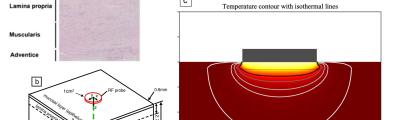
A computational modeling tool that provides first-pass estimation of the thermal effect produced in the vaginal wall by vaginal therapy devices.
A tool to generate computational scientific evidence as alternative approaches to clinical

This study demonstrates the application of gold-standard method of manufactured solutions (MMS) code verification to verify a commercial finite element code for elastostatic solid mechanics analyses relevant to medical devices. The Python/SymPy code used to generate source terms is available as supplemental material.
MC-GPU is a Monte Carlo simulation code that can generate synthetic radiographic images and computed tomography (CT) scans of realistic models of the human anatomy using fast Graphics Processing Unit (GPU) cards.

This regulatory science tool presents a computer model to assist investigators with analyzing and sizing multi-reader multi-case (MRMC) reader studies that compare the difference in the area under Receiver Operating Characteristic curves (AUCs) from two modalities.
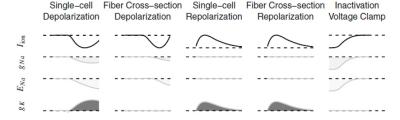
An approach for optimal experimental design and estimability analysis for mechanistic models of cardiac electrophysiology to determine their ‘identifiability’
A finite element model of the human shoulder for simulating humeral abduction and calculating outputs such as contact force, contact pressure, contact area, stress, and strain.

Provides 16 mock intervertebral body fusion device (that is, a spinal cage) designs with three lattice structure implementations. Designs are provided in stereolithography (STL) file format so they may be fabricated using additively manufacturing (AM) technologies.
A software program written in Matlab for analyzing color performance testing data in endoscopy devices
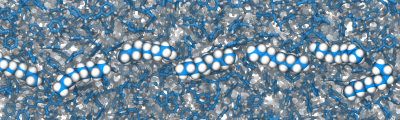
Predicts the impact of extraction conditions, sample geometry and material properties on extraction test efficiency
CHemical RISk calculators (CHRIS) – Color Additives (v2)
Conduct screening level risk assessments to aid in the biocompatibility evaluation of bulk additives and impurities in polymeric medical device components